Site Meter Tweeting Mount Merapi: A new Kind of Disaster Response | UN Dispatch
Increase Font Size Decrease Font Size

Tweeting Mount Merapi: A new Kind of Disaster Response

There has been a lot of discussion in the development blogging world about crowd-sourcing and its future in disaster response. It tends to focus on humanitarian technology, crisis mapping, and in particular the Ushahidi tool. Today, Reuters reported on a smaller, more personal effort.

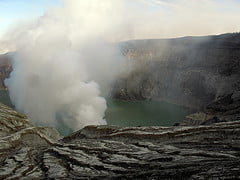
An Indonesian community near the erupting Mount Merapi volcano has been using Twitter to help manage a disaster response. The Twitter account is part of a broader information network that began with community radio, called Jalin Merapi.  It was originally designed to tracek signs of volcanic eruptions. Now, according to Reuters, “Jalin Merapi has helped shelters that are unable to receive government aid by deploying about 700 volunteers who report by tweeting specific aid needs…the community announced they needed help to provide meals for 30,000 people, and the meal was ready in four hours.”

It’s a great story, and it’s interesting for a couple of reasons. First of all, the Jalin Merapi network is mobilizing local resources, not guiding an influx of foreign aid. The ability of social media to connect disaster survivors with local benefactors may over time decrease the need for international relief in response to disasters.

Secondly, Twitter is actually a pretty bad tool in situations like this. It has no way to verify accurate information, the data stream is full of random clutter, and it can slow or crash because of rumors about Brangelina. But people use the technology they are comfortable with in times of crisis, and in the case of Indonesia, that was Twitter. It’s a message to keep in mind when designing ICT for development tools.

photo credit: pr-r2


  • Mamat

    Hi – just reading this, more than a year after its posting, after meeting with some of the people involved in the local Merapi response.

    Hate to say it, but the representation isn’t accurate. Twitter was only ONE of the tools used. The powerful thing was how different tools were used and combined. They included Twitter, Facebook, SMS, and community radio – in fact, Jalin Merapi is the name of the community radio network. Furthermore, the effectiveness – not only according to the people involved whom I met, but others who are aware of the effort – came because those involved in the communication were well-established before the eruption; they’d built up practice through community communications development efforts, and by responding to earlier disasters (a previous eruption, an earthquake). What the local community had was not just a ‘twitter tool’ – they had developed local communication capacity which made them more resilient. People knew the radio stations, local volunteer networks on the ground had levels of established familiarity, and so on, and the information was managed, verified, etc. It wasn’t simply a chaotic Twitter stream.

    Perhaps Twitter was fastened onto in the coverage because it’s ‘hip’? Which, if so, rather represents biases / distortions that take place in finding news ‘angles’, rather than telling the story of what is actually happening on the ground. Which is not a new phenomenon.

    Last point: in terms of local responses saving lives before international response, I find this is always or almost always the case – tsunami in Sri Lanka, floods or earthquake in Pakistan, and so on. International response is needed but its framing usually ignores the fact that local communities already did much of the urgent life-saving – and by ignoring it, often fails to take account of it, access the knowledge that is there, and build on that.

    Thanks :-)

Diplo Tweets