
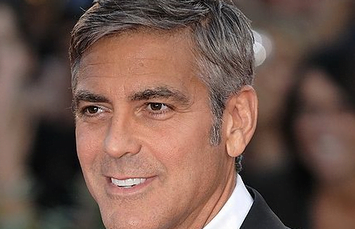
Celebrities have been given a hard time in recent years for some of their attempts to play roles in international politics and humanitarian affairs. From George Clooney offering policy analysis on Sudan to Angelina Jolie’s cinematic depiction of the war in Bosnia in the 1990s, well-meaning celebrities have been accused of over-simplifying complex political problems; proposing impractical solutions; and failing to adequately consult those they are trying to advocate for.
But, speaking of George Clooney and Sudan, there have been a few calls for him to be an advocate for the recent #SudanRevolts movement, which began at Khartoum University a couple of weeks ago. There has been a concerted effort on the part of many Sudanese to mobilize international attention by increasing the presence of #SudanRevolts on Twitter and elsewhere online. On balance, there is a real desire for coverage, though there have also been a number of voices emphasizing that this fight will be fought and won, by Sudanese themselves, with or without international media attention.
Celebrities with caring hearts know that they have access to certain platforms and audiences that are simply not available to most people, and so they seek to leverage that in support of those they want to advocate for. They know they can help achieve the goal of more media attention. What seems to go wrong with celebrity activism is that they often forget to pass the mic.
So what role can there be for celebrity activism in #SudanRevolts?
A couple of tips, if you are a celebrity and you want to get involved:
1) Do not create the impression you are speaking for the voiceless. Sudanese voices are everywhere, and they’re coming through loud and clear from where I’m sitting in New York.
2) Use your leverage to get attention, then re-direct the spotlight to one of Sudan’s rock star citizen journalists or grassroots organizations (GIRIFNA, Sudan Change Now) and let them do the talking.
3) Play a supporting role, not a leading one. This will not only be more effective, but will help you avoid accusations that you are over-simplifying or misrepresenting the politics of a place where you do not know the culture or speak the language.
This is important because, for example, many Sudanese are uncomfortable with the tendency of commentators to succumb to the catchiness of the “Arab Spring comes to Sudan” motif. Student-led uprisings led to the overthrow of a military dictatorship twice in Sudan’s post-independence history, both long before the Arab Spring. One Sudanese blogger writes, “An Arab spring? No: the Sudan summer”; and a Sudanese tweeter noted, “Yes, we demand freedom but the terminology does not represent Sudan, because we are not just Arabs.”
In addition, as is increasingly being made clear, these protests are not about austerity measures. They are about ending over two decades of military dictatorship. Misrepresentation can only be avoided by listening; and just as important, letting people speak for and represent themselves.
@MiaFarrow has sent some tweets and re-tweets in support of #SudanRevolts, but other than that it has been relatively quiet on the celebrity front.
Sudan Change Now published an open letter to George Clooney, available here on the Sudan Tribune website, which reads in part:
We are very pleased to see the efforts that you are exerting in internationally exposing the injustices happening in Sudan today and in the past years. […] Sudan Change Now stands firm in support of the people of Sudan regardless of race, ethnicity, tribal, religious or gender backgrounds. Sudan Change Now asks that you kindly support us in showing a more comprehensive picture of the conflicts in the country with an understanding of the complexities as well as the terrible conditions that many face throughout Sudan. Portraying the regional conflicts in the country as a simplified war of Arabs and Africans concerns us. It does not fully capture the historical and political aspects of the conflict considering that the Sudanese government is a dictatorship and does not reflect the sentiments of the majority of the people.
It seems the best way to support #SudanRevolts is to “Cover the story.” A good way for a celebrity to help get the story out? Provide a megaphone for those reporting from the ground.